What is critical lane volume, and where does it fit in a signal timing study
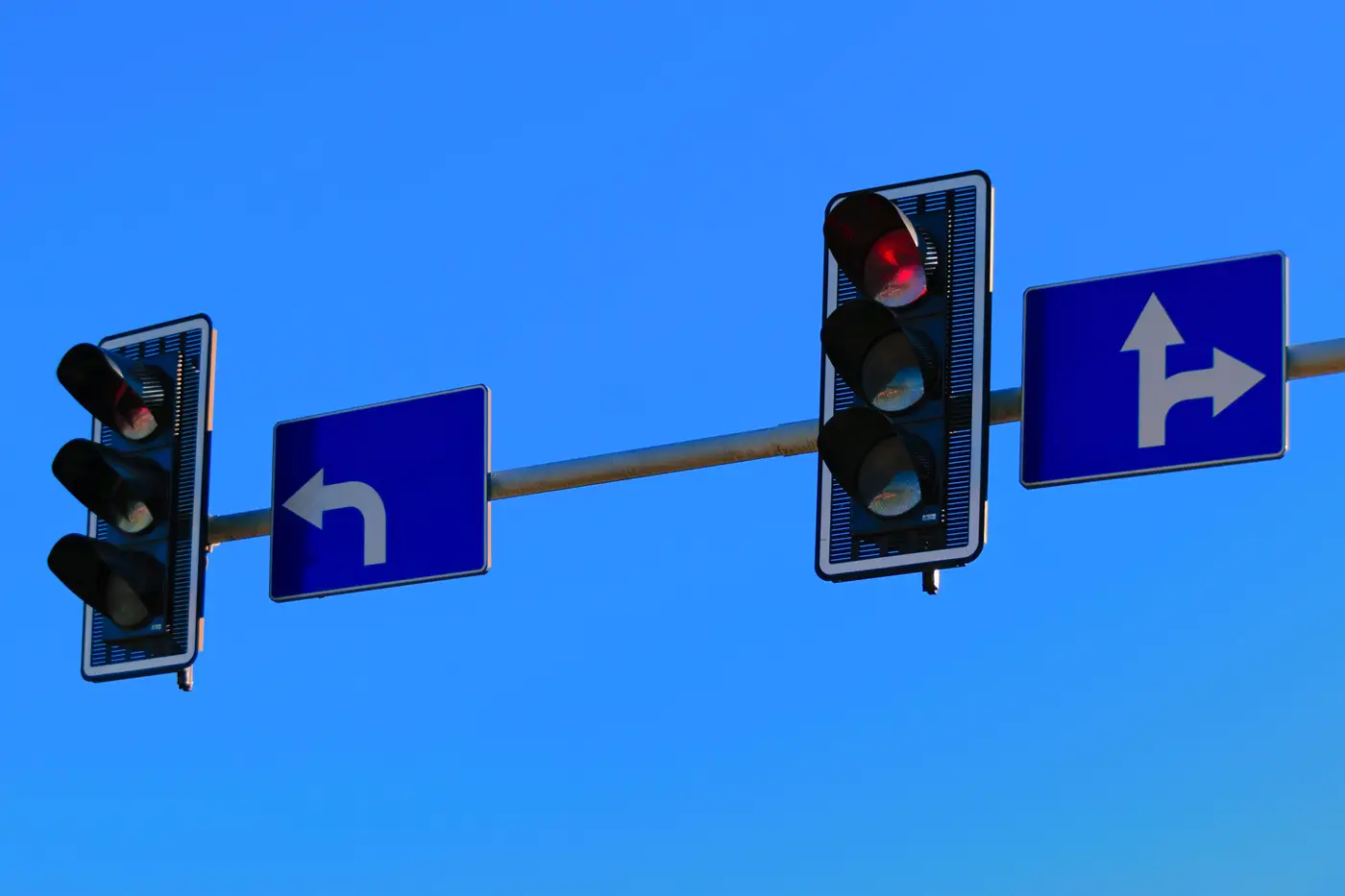
Critical lane volume is the one number a signal timing study cares about for each phase: the movement that needs the most green time to clear, expressed in vehicles per hour per lane. Every other movement sharing that phase's green interval matters for the overall operations picture, but the critical one is what sizes the phase.
Picking the critical lane for each phase
At a typical four-leg signalized intersection, a phase often serves more than one movement at once, say a through movement running alongside a permitted left. You don't average those two volumes. You take whichever one governs, after adjusting the raw count for lane width, approach grade, heavy-vehicle percentage, and the other HCM adjustment factors you'd apply anyway. That adjusted number, per lane, is the critical lane volume for that phase.
Pick the wrong movement as critical and the error doesn't stay contained to one phase. The cycle length, the splits, the offsets down the corridor, all of it gets sized to a demand that isn't really the binding constraint.
Summing the critical volumes
Add up the critical lane volume from every phase across the cycle and you get the sum of critical volumes, SCV. It's the quick capacity screen a lot of traffic engineers run before committing to a full HCM operational analysis or a simulation build. Rough rule of thumb that shows up on a lot of informal cheat sheets: under about 1,200 vphpl the intersection is probably fine as it sits; past roughly 1,600, you're looking at a geometric change or added capacity before the cycle-length math is even worth doing. HCM doesn't set those numbers in stone, and SCV was never meant to replace a real operational analysis. It's a screen. It tells you whether an intersection is worth a full study, not what the splits should be.
Where lead-lag phasing draws on the same numbers
Lead-lag phasing runs one direction's left turn ahead of the opposing through movement, then lets the other direction's left trail behind. The decision to lead one approach over the other comes straight from the same per-movement volumes that fed the critical lane analysis. Lead the heavier left to cut its delay, and let the lighter approach lag without much of a queue penalty. Get the underlying volumes wrong and a lead-lag plan that penciled out fine on paper starts stacking queues nobody sized for during the PM peak.
This is usually where a shaky count surfaces first. A critical lane volume built on the wrong peak hour, or on counts that missed a seasonal shift in corridor demand, shows up as a mismatch between what the timing plan assumes and what the queue cameras or the complaint calls are reporting.
Where the counts come from on a link nobody's instrumented
None of the analysis above starts until you have turning movement counts by approach and direction for the hour, or hours, under study. At a signalized intersection with a modern controller, that's a pull from the detector log. On a mid-block segment or an uninstrumented approach, where nobody's ever mounted a counter and nobody wants to lay tube counts or close a lane to get one in, somebody still has to produce a count before the critical lane math can even start.
Vehicle Counting turns one scheduled image pass over a corridor into a tally by link and direction, delivered as a CSV plus the marked-up frame it came from, with no tube counts and no lane closure needed to get the number.
If a gap in your turning movement count set is sitting on a link like that, it's worth seeing what one pass over it can give you.